Showing posts with label Asian. Show all posts

Monday, July 8, 2013

The Economics of Trafficking: The Kachin and Burma

Human Trafficking is a lucrative business. The United States estimates that per year, 600,000-800,000 persons are trafficked across international borders. It is though that 2.5 million people are being trafficked around the world at any given time. This generates an estimated annual global profit of $32 billion dollars. It is the third largest illegal industry in the world after drugs and armed sales. In this post, we examine the economic and social factors motivating the human trafficking of one particular population: the Kachin.

The Kachin

Kachin women in traditional garb

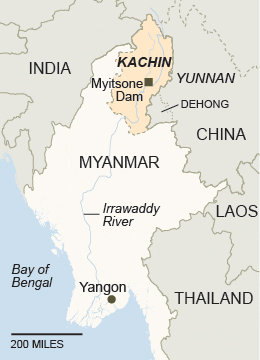
The Kachin is a population that has been a target of human trafficking, due to the nature of their situation. The Kachin people are a group of ethnic peoples who inhabit the Kachin Hills, from which the population derives its name, in northern Burma and neighboring areas of China and India. This population has been greatly effected by the conflict between the Burmese government and the Kachin Independence Army. The Burmese government has attempted to expel this population group, therefore rendering them extremely vulnerable. actors that have proved dangerous to the Kachin. Since June 2011, when the Burmese military ended a 17 year ceasefire and launched an offensive against the Kachin Independence Army, there have been 24 documented instances of trafficked individuals; however, those are only the documented cases. The Kachin Women's Association-Thailand (KWAT) published a report stating that Kachin women and children are particularly vulnerable to trafficking, and it is an extremely lucrative business for the traffickers.

Fast Facts

  • Between 2004-2007, there were 133 verified trafficking cases, involving 163 women and girls
  • A quarter of those trafficked were under 18, with girls as young as 14 forced to be brides
  • The continuing high incidence of trafficking indicates that the regime's new anti-trafficking legislation is failing to have any impact
  • The Kachin population are vulnerable due to
    • forced migration
    • lack of recognition from government
    • lack of governmental power

Why Are the Kachin So Vulnerable?

Part of the problem is the way they are treated in Burma. As the government has attempted to expel them from the country, they have no official governmental recognition, therefore rendering them extremely vulnerable as there are no programs in place to protect them, nor records of individuals when they go missing. Further, due to the conflict, approximately 100,000 people have been uprooted in the last two years and are now living in displacement camps. The Burmese government has also barred international aid organizations from accessing refugee camps housing the Kachin, and China has refused to provide assistance to Kachins who are seeking refuge across the border. In August 2012, the Chinese government even forced thousands of Kachins who were seeking shelter in the country back into Burma. "Push tens of thousands of people to China's doorstep, deprive them of food and status, and you've created a perfect storm for human trafficking," said KWAT spokesperson Julia Marip.
Kachin Women's Association-Thailand

Who is Trafficked?

Women and children are profitable income sources for traffickers. Women are either sold as brides or into brothels or massage parlors. China's one-child policy has created a particular market for trafficked Kachin women. Currently in China there are 117 men for every 100 women, and by 2020 there will be 30 million men looking for brides among 24 million women. Kachin women are considered favorable brides due to the lightness of their skin and proximity to the border. Kachin women are also thought of as fertile and excellent child bearers. They are sold for around $6,5000. Traffickers either kidnap women who are either migrating to the city from their villages, or will go into villages and refugee camps and offer families a dowry, playing on traditional customs. Chinese businessmen form a significant portion of the clientele. Lower income Chinese men pay brokers to fetch women from Myanmar families. Other women are trafficked into Thailand's sex industry; trafficked sex workers are often raped, and are sold from $300 upwards to the prostitution industry

Kachin Refugee Camp in Burma
Children are also viewed as highly sought after commodities by traffickers as well. Children trafficked to Thailand are occasionally rented out from parents. Brokers offer around $100-224 a month for children; children can earn from $15-100 a day working as beggars or shop assistants. Owners often beat children who are working as beggars so they appeal more to alms givers. Children also make excellent assistants as they can be paid less, are less likely to attempt to escape, and are more subservient in general; the favored age by traffickers are 3 month old toddlers to children under ten years of age. Young children are also sold to fuel Thailand's growing adoption rackets; others are sold into the child prostitution industry. Traffickers use the Internet to dodge international forces against child proposition. Recently, NGOs' efforts and stricter Thai laws have created a crack down on child trafficking, therefore increasing the demand for child trafficking as the supply dwindles.


Jasmine Prokscha
Intern

Tuesday, June 25, 2013

Official Complicity with Human Trafficking

Although actions must be taken at all levels, it is crucial to any anti-human trafficking movement to have strong governmental support and action. However, according to the U.S. State Department's report on trafficking around the world, there are many governments whose officials who comply with, or even aid, traffickers. For example, NGOs in Malaysia have reported that the police often will not investigate complaints that employers are confiscating passports, travel documents, or withholding wages as possible trafficking offenses. Furthermore, in 2010 the government did not report any prosecutions of employers who subjected workers to conditions of forced labor, nor were any government officials convicted of trafficking related complicity, despite numerous reports of collusion between police and trafficking offenders. Police collaboration is a common thread throughout many countries; local law enforcement officials are willing to take bribes to look the other way when presented with cases of human trafficking, or, at the most extreme, are the ones perpetrating human trafficking themselves.


India
One such example is India. The report stated "Official complicity in trafficking was a serious problem that remained largely addressed by the government. Corrupt politicians, police, and border security forces on both sides of the India-Bangladesh border reportedly recognized a token used by human traffickers to evade arrest if caught at the border." Some corrupt law enforcement officers facilitated the movement of sex trafficking victims, protected suspected traffickers and brothel keepers from enforcement of the law, took bribes from sex trafficking establishments and sexual services from victims, and tipped off sex and labor traffickers to impede rescue efforts. Many owners of brothels, rice mills, brick kilns, and stone quarries who engaged in human trafficking were politically connected and therefore immune from prosecution.Further, of the Anti-Human Trafficking Units established by the government, many were criticized as being ineffective or only existing on paper and not in practice. Furthermore, there was significant complicity of some governmental officials in human trafficking. Many sources noted that the Indian central government approached anti-trafficking measures in an uncoordinated and piecemeal manner, therefore allowing for greater instances of corruption.
One highly publicized case of sexual and physical abuse, including both sex and labor trafficking, of women and children in Apna Ghar shelter for mistreated victims in the state of Haryana, demonstrates the pervasiveness of official compliance with human trafficking. Not only was the shelter run by the state, but police officers reportedly raped some of the inhabitants and destroyed evidence once an investigation into the home commenced.


Burma
Burma is one of the highest offenders in regards to official complicity in human trafficking. The Military is the main perpetrators. Internally, there are several different ways in which the military implements human trafficking. The military engages in the unlawful conscription of child soldiers. Boys as young as 10 years are forcibly recruited to serve in the Burmese army and ethnic armed groups through intimidation, coercion, threats, and violence. Children of the urban poor are at particular risk of involuntary conscription; UN reports indicates that the army has targeted orphans and children on the streets and in railway stations, as well as young novice monks from monasteries for recruitment. It also continues to be the main perpetrator of forced or compulsory labor inside Burma. Military and civilian officials target minors of ethnic minority groups, and use men, women, and children for forced labor for the development of infrastructure and state-run agricultural and commercial ventures, as well as forced portering for the military. 
An NGO study published in 2010 found an acute problem in Chin State, where a survey of over 600 households indicated that over 600 households indicated that over 92% experienced at least one instance of a household member subject to forced labor; the Burmese military reportedly imposed two-thirds of these forced labor demands. Children are often subjected to forced labor in tea shops, home industries, and agricultural plantations. Exploiters traffic girls for the purpose of prostitution, particularly in urban areas. There are also reports that Burmese officials kidnapped Rohingya women from Sittwe and subjected them to sexual slavery on military installations. There were also reports that victims deported from Thailand into Democratic Karen Buddhist Army controlled areas of Burma continue to be extorted and retrafficked by DKBA elements, in collusion with Thai officials.
How can the military do this? There are many causes of human trafficking in Burma. The military regime's climate of impunity, gross economic mismanagement, and the acceptance of child soldiers as a method of recruitment remain top causal factors. Further, the authorities refuse to recognize members of certain ethnic minority groups, such as the Rohingyas, as citizens and provide them with identification documentation, which make them a prime target.


Vietnam
The Vietnamese government is complicit in human trafficking as it has certain programs in place that human traffickers can easily utilize to gain access to their victims. For example, Vietnam is a source country for men and women who migrate abroad for work opportunities. Many of the migrants are process through state-affiliated export companies which coerce migrants to sign contracts in languages they cannot read, and charged exorbitant fees, sometimes as much as $10,000. This has forced Vietnamese migrants to incur some of the highest debts among Asian expatriate workers, making them highly vulnerable to debt bondage and forced labor. Also, there has been a significant lack of prosecution of perpetrators of human trafficking; many NGOs claim that government officials are often willing to turn a blind eye towards trafficking in return for bribes.


Thailand
Thailand's greatest issue is corrupt law enforcement. The majorities of networks that traffic foreigners into Thailand tend to be small and not high organized, those who traffic Thai victims abroad tend to be more organized and work in more formal networks and will collaborate with law enforcement officials. Also, as the Thai government has no official laws that address sex tourism, there remains greater leeway for sex trafficking. Broader issues in regards to the Thai government and trafficking are local police corruption, including direct involvement in and facilitation of human trafficking, biases against migrant laborers, lack of understanding among local officials and courts in regards to human trafficking, particularly labor abuse cases, and finally systematic disincentives for trafficking victims to be identified. Corruption is one of the largest issues as it is widespread among Thai law enforcement personnel, creating an enabling environment for human trafficking to prosper. There are reports that officials protect brothels, other commercial sex venues, and seafood and sweatshop facilities form raids and inspections. Furthermore, there are also reports that Thai police and immigration officials extort money or sex from Burmese citizens detained in Thailand for immigration violations, and sell Burmese people who are unable to pay labor brokers and sex traffickers.
Further, due to the refusal of the Thai government to grant legal status to Ethnic minorities from the northern Hill Tribes, these populations are at an extremely high risk for trafficking.


Cambodia
Cambodia has a significant history of human trafficking, due to the longtime civil unrest that created an unstable environment rendering many homeless; refugees are particular targets for human traffickers. Furthermore, there are reports that some law enforcement and government officials are believed to have accepted bribes to facilitate the trafficking and sex trade. There are other reports of government officials who are complicit in the trafficking by accepting bribes. Corrupt officials facilitate the transportation of victims across the border, or route migrants deported from Thailand to human traffickers. However, there have been several large-scale prosecutions of police officials for trafficking corruption charges. The former Deputy Director of the Police Anti-Human Trafficking and Juvenile Protection Department was convicted for complicity in trafficking and sentenced to five years' imprisonment; two officials under his supervision were also convicted and sentenced to seven years' imprisonment. Another example was when police arrested two military officers and one member of the military police for running brothels and trafficking.


Jasmine Prokscha
Intern

Tuesday, June 18, 2013

7-11 Franchise Owners Arrested in Labor Trafficking Scheme


On Monday, eight men and one woman from Long Island were arrested with conspiring to commit wire fraud, with stealing identities of U.S. citizens, and with concealing and harboring illegal aliens employed at 7-Eleven Inc. franchise stores in Long Island and Virginia. The identities stolen included three deceased persons and one eight year old child. The arrests were made by U.S. Immigration and Customs Enforcement's (ICE) Homeland Security Investigations (HSI), the Social Security Administration's Office of the Inspector General, the New York State Police, and the Suffolk County Police.

The defendants, who owned the 7- Eleven franchises, created a scheme in which they allegedly hired over 50 illegal aliens and gave them identities stolen from U.S. citizens. U.S. Attorney for the District of New York Loretta Lynch stated that the defendants allegedly forced the immigrants to work 100 hours a week and stole the majority of their pay by taking substantial portions of the paychecks that they received from corporate headquarters.

The defendants also forced their employees to live in and pay cash rent in unregulated and overcrowded boarding houses they owned. Lynch referred to this system as a "plantation system", which has allegedly been going on for more than 13 years. The defendants trafficked the workers from Pakistan or the Philippines, where they had roots, thereby enabling them to recruit from within their own ethnic communities.


Most surprising: there were no safeguards in place at the national 7-Eleven Inc. payroll office. Despite the fact that the defendants had put the same social security numbers for victims working in both Virginia and New York, checks were still sent to both of them. The case began two years ago when a 7-Eleven employee approached the new York State Police about not being paid for his work; later another worker contacted the Suffolk County Police.


This operation highlights several issues often seen in cases of labor trafficking. One, the ease in which people are able to perpetrate these crimes. There was no apparent connection between the two families, yet they both committed similar types of fraud. Second, the victims were classified by the state as "illegal immigrants". Although agents from ICE are currently treating the workers as potential witnesses and are not seeking to move to deport them, Ms. Lynch stated that she felt that the employees "were not innocent victims in this scheme" although "they had been abused". Further investigation is necessary, but in the meantime, these workers should be viewed as potential victims of labor trafficking, brought to the U.S. and exploited.

 ICE, however, did put this note on the bottom of their on-line report:

HSI encourages the public to report suspected labor trafficking, forced labor or the exploitation of undocumented workers through its toll-free hotline at 1-866-347-2423 (from the U.S. and Canada), or from anywhere in the world at 1-802-872-6199, or online at www.ice.gov/tips.

Monday, December 10, 2012

Human Trafficking in Chicago's Massage Parlors


Brothels that front as massage parlors are closer to you than you think – they are located down from your streets and in your neighborhoods. The following news story from the Center Square Journal attests to the prevalence of coerced commercial sexual services, both adults and minors, in the massage parlor businesses in Chicago:

Report: Human Trafficking Pervasive in Massage Parlors
By Sam Charles | Friday, December 7, 2012
According to a report published by the Chicago Alliance Against Sexual Exploitation and Not In Our Name!, a group made up of massage therapists against sex trafficking, the culture of massage parlors is conducive to sex trafficking in the United States. A recent report by Center Square Journal identified several area massage parlors where sexual favors are allegedly offered by mainly East Asian immigrants.
Check a map of the reviewed massage parlors here.
“Human traffickers are using the massage industry as a cover and a way for sex trade customers to identify and connect with paid sex opportunities, often times with women who have no other choices,” the report stated.
The study, released earlier this year, concludes that one of the driving factors behind sex trafficking is the constant demand for it. “Johns,” those who pay for sexual favors, are driving the industry, the report said.
“This group constitutes the demand for sexual acts from women, men, transgendered individuals and children,” the report stated. “Purchasing sex is often an act of asserting power and control. Buying sex from another person dehumanizes the victim because it puts a price on a person’s self-worth.”
According to the report, In 2008, nearly 67 percent of prostitution-related arrests in Chicago were of prostituted people, 34 percent were of customers, and only 1 percent were of pimps.
“This approach fails to address the root cause of prostitution: the demand,” the report said.
Most of the massage parlors in Brown Line Media‘s coverage area operate out of smaller spaces, typically below residential spaces along busy streets.
According to the report, commercial front brothels that claim to specialize in Asian techniques operate by pretending to offer legitimate services (i.e. massages, acupuncture, etc.), but actually primarily provide commercial sex. The victims are most often Asian women, both documented and undocumented.
None of the six massage parlors in Brown Line Media‘s coverage area that allegedly offer sexual favors commented on the sites’ reviews.
All of the establishments in Roscoe View Journal and Center Square Journal‘s coverage area that allegedly offer clients sexual gratification also currently hold a Chicago Massage Establishment License, according to city records.
Chicago’s Department of Business Affairs is responsible for granting licenses and inspecting businesses that seek and are granted Massage Establishment Licenses. To acquire a license, massage parlor proprietors must be fingerprinted, pass a background check, employ only those with personal massage licenses and provide copies of all massage therapist licenses issued by the Illinois Department of Financial and Professional Regulation for every employee or prospective employee. These inspections, according to the department website, are administered before the license is initially granted and every two years when the license is renewed, in addition to periodic random inspections.
According the department’s website, “Message establishment operators should not allow its employees, agents or independent contractors to touch, or offer or agree to touch the sexual or genital area of any person. Engaging in any of these acts makes the Massage Establishment licensee strictly liable for revocation or suspension of the license.”
The report acknowledged that trafficking may be difficult to see in the open, but there are several tell-tale signs of massage establishments that engage in human trafficking, such as:
  • Suggestive or blatantly sexual advertising.
  • An expired or nonexistent license.
  • Darkened, obstructed, or covered windows.
  • People coming and going at odd times.
  • Mostly male clientele utilizing the establishment.
  • Predominantly Asian women, of diverse ethnicities and nationalities, including Korean, Thai, Chinese, and ethnically Korean-Chinese citizens performing the services.

Monday, November 19, 2012

October 2012 Community Forum Outcome Document


AATOP Community Forum Outcome Document
October 24, 2012

The Asian American Trafficking Outreach Project (AATOP), a program launched by the International Organization of Adolescents (IOFA) held its first community forum on October 24, 2012 at the Hull House Museum. This forum was the first meeting to connect organizations from the Asian Pacific Islander (API) community of Chicago that have interest and expertise in the issue of human trafficking. Over forty attendees ranging from college students to professionals in the fields of advocacy, health, legal, education, and social services came together to hear about AATOP and contribute to the discussion about outreach to victims of human trafficking in underserved API communities.

IOFA provided a general introduction to the initiative, explained the scope of human trafficking in the United States and Chicagoland area and provided guidance on how to identify trafficking victims. Shelby French (IOFA Executive Director) and Sehla Ashai (IOFA Anti-Trafficking Program Specialist) segued into a description of AATOP’s goals and target activities. Esther Liew (IOFA AATOP Program Development Intern) presented research from IOFA that demonstrated little evidence that API trafficking victims are being identified or provided support by a sample of API-serving organizations in Chicago. Using this as a launching point, Shelby invited the attending organizations and individuals to partner in AATOP efforts at various levels of participation. Both IOFA and participating organizations will bring together expertise from different fields with the goal of effectively reaching API trafficking victims and agencies that serve this demographic.

We proceeded to a discussion session that addressed these questions:

  • Do you believe that human trafficking is a critical issue facing API communities?
  • Do you think human trafficking is being addressed adequately in API communities?
  • What are the challenges to building public awareness and concern about human trafficking?
  • What are the opportunities?
  • Which API communities are at greatest risk?
  • Who needs to be involved to ensure success and sustainability of AATOP efforts?
  • What are the specific challenges and opportunities in relation to outreach into this particular community?
  • What are some culturally appropriate models or methods of outreach to victims of similar crimes?

The discussion explored attendees’ understanding of the challenges to serving trafficked victims and generated suggestions of how they themselves can contribute to AATOP efforts.

Feedback points included:

Human trafficking is a critical issue facing API communities
  • Psychological coercion of human trafficking can be damaging.
  • Service providers in attendance have spoken and worked with trafficked individuals but have not realized it.
  • Trafficking is a big problem in the Vietnamese community. The Vietnamese American Community of Illinois has received calls eliciting support for trafficked victims. It has also conducted anti-trafficking programs for the Vietnamese community.

Fear of removing self from trafficked situation
  • Some victims come to the U.S. not knowing anybody.
  •  They get minimal provisions in the trafficked situation, but if they leave, they are stepping out into the unknown where there may receive no protection at all. It is scary to be in a trafficked situation, but scarier not to know what is out there, so not many trafficked individuals leave.
  • A shelter living situation is not incentive enough for victims to leave.

Building a connection between organizations that potentially serve API trafficking victims
  • If staff do not know how to identify a trafficking situation, they will not know what to do when confronted with it.
  • Benefit of having a coordinated network: direct service providers builds relationships with victims and with other collaborating organizations. Victims will choose service providers that they trust to advocate for them. They will be less fearful of presenting their trafficking situations to a police or lawyer if they have a professional who supports them.
  • Organizations serving trafficking victims should know how to connect and coordinate with organizations in victims’ home countries in case repatriation is necessary.

Labor trafficking
·         The difference between trafficking and labor exploitation is blurry. What constitutes as exploitation in one culture is not the same in another; what is “normal” in one culture is not in another.
  • Some people do not understand the difference between labor exploitation and trafficking, so we need to be clear when explaining the distinction between the two.
  • Outreach work into labor violations and employment issues face resistance because victims and social service organizations do not want to go against businesses. Victims may deny that there is a problem.
  • Some of the largest labor trafficking cases have involved Asian workers. Labor trafficking preys on the language gap of victims. There is success when workers are organized to advocate for recognition of labor trafficking. However, it is difficult to organize domestic workers because they are isolated from each other.
  • There is currently no law association with whistle blowing or “qui tam” (a writ whereby a private individual who assists in a prosecution is entitled to a percentage of the recovery of the penalty as a reward for exposing wrongdoings) to empower workers to advocate. There is little incentive for victims to challenge labor trafficking employers because of the burden of litigation and re-traumatization. Using litigation for outreach has not been successful, but has been successful when used for compensation.
  • If there is an affluent defendant, the case will go to trial because reputation is at stake.

AATOP’s priority
  • AATOP’s priorities are threefold: identify victims, gather services so they are accessible to victims, and train organizations. Victims face a dilemma if there is nowhere they can receive services. Connections are currently non-existent, so we must put a network together.

Recommendations for moving forward
  • Victims or people who have identified a human trafficking victim can call the 24/7 National Human Trafficking Hotline (1-888-3737-888) for assistance.
  • Members of the AATOP network can also call IOFA at 773-404-8831 if a victim is identified and wants to be connected with law enforcement and/or legal and social services in the area.
  • It will take awhile to get the API community used to the concept of trafficking outreach, so relationship-building with participating organizations and specific communities is very important.
  • Have conversations with the API community to familiarize them with human trafficking.
  • Organize community leaders to provide a safe space for victims to meet and talk
  • Survivor participation: we want to hear from survivors, ask them questions, and receive direct feedback to inform our programs.
  • For those working with older refugee/non-US citizen girls under pressure to get jobs/are working, have conversations with them about work: work hours, language barriers, fear of being fired, what has raised questions for you, etc.
  • AATOP is in the process of translating trafficking outreach tools into culturally appropriate terms so agencies can use them.
  • AATOP can use resources from Look Beneath the Surface, a culturally appropriate trafficking campaign.
  • Divide up by target ethnic communities and by expertise to contribute to AATOP efforts: legal, social service, capacity building, etc. For example, the Chicago Bar Association can help with the legislative portion.
  • Strength in numbers:  the more organizations we get to come on board, the more the issue will be moved to the forefront.
  • Positive peer pressure: launching point for a shift in thinking and beliefs of other organizations.
  • Train law enforcement to identify API trafficking.
  • College students can be advocates on campus with their student organizations.

Next steps for AATOP
  • Send out a survey inquiring the interest and participation level of potential member organizations
  • Maintain open communication with member organizations through the AATOP blog, listserv, and quarterly newsletters
  • Compile a list of member organizations
  • Have phone calls or meet with member organizations to check in on AATOP progress on their part, then provide help where necessary
  • Recruit for the AATOP steering committee
  • Recruit more AATOP member organizations by reaching out to more API-serving organizations in Chicago and inviting them to participate in AATOP
  • Recruit non-organizationally affiliated community members to be supporters of AATOP
  • Hold ethnic-specific meetings with community members and interested organizations
  • Awareness building and public education
  • Victim outreach
  • Training and capacity building of existing organizations and resources
  • Ongoing technical assistance to organizations
  • Enhance legal and social services for victims
  • Establish and coordinate cultural competent referral networks
  • Research and evaluation of target activities